Overview
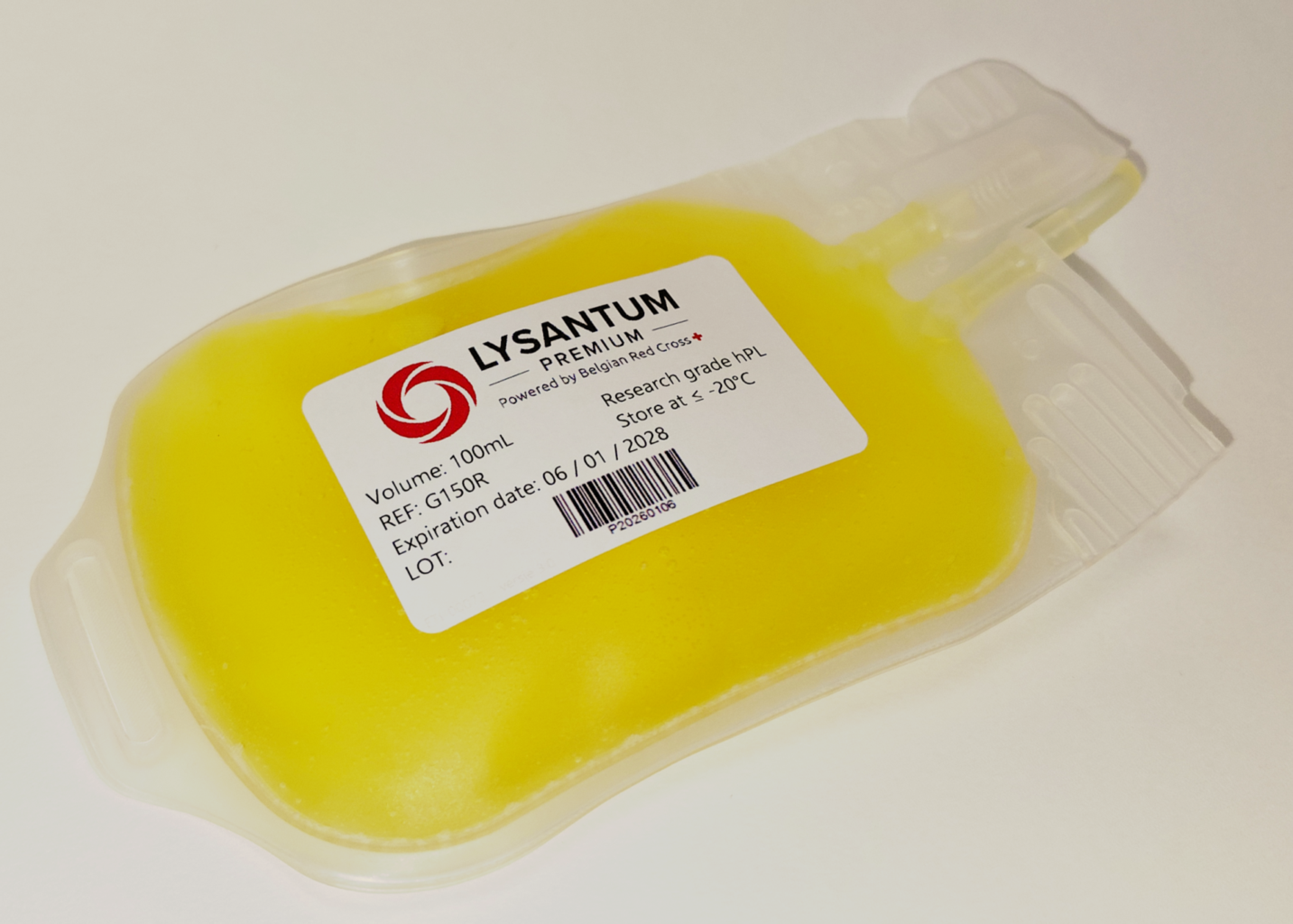
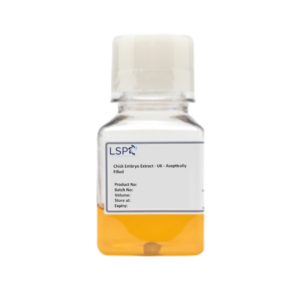
Lysantum hPL Premium is our standard human platelet lysate, for use with low-calcium media. It is available in research and clinical grades.
Human Platelet Lysate (hPL) is a xeno-free cell culture supplement made by lysing human platelets. It is rich in growth factors, cytokines and other bioactive molecules. That makes it a strong alternative to foetal bovine serum (FBS) for stem cell and cell therapy culture.
Why switch from FBS to hPL?
- Fully human and xeno-free: no animal proteins, which avoids the zoonotic and immunisation concerns linked to FBS
- Fits with regulatory direction: European guidelines recommend removing bovine material from culture media for cell-based therapeutic products wherever possible
- No switchover later: using hPL from the start avoids re-validating your process when you move from FBS to clinical production
- Better MSC growth: improves the proliferation of mesenchymal stromal cells compared with FBS, without loss of phenotype
- Consistency: pooled from multiple donors and manufactured to reduce batch-to-batch variation
- Heparin-free use: the production method lowers fibrinogen, so you don’t need to add heparin
Sustainably sourced
Our hPL is produced by a partner blood establishment in a closed system. It uses platelet concentrates that have passed their five-day transfusion shelf life and would otherwise be discarded. Donors are voluntary, unpaid and give explicit consent. Platelet concentrates are treated with pathogen inactivation.
Premium or Ultra?
hPL Ultra is a next-generation lysate with a higher growth factor concentration. Both versions work for most cells, so we recommend validating both with yours. See also Lysantum Ultra.
Related products: Foetal Bovine Serum and Human AB Serum.
Ask us which hPL suits your cells: email sales@lifesciencegroup.co.uk or call +44 1234 889180.
Specifications
| Sterility |
Tested for bacteria and fungi |
| Viral testing |
Non-reactive for anti-HIV-1/2, anti-HCV, HBsAg, syphilis, HIV NAT, HBV NAT and HCV NAT |
| Endotoxin |
< 0.500 EU/mL (LAL) |
| Mycoplasma |
Tested by PCR |
| Growth promotion |
Tested on MSC culture |
| Recommended media |
Low-calcium media such as DMEM/F-12, RPMI-1640, Ham’s F-12 and IMDM. Avoid DMEM and alpha-MEM. For MSCs, use DMEM/F-12 |
| Working concentration |
Typically 5–10% (v/v). Seed MSCs at 3–6 × 10³ cells/cm² |
| Donors and testing |
Healthy, voluntary, unpaid donors at certified blood banks (21 CFR 640). Individual donors and complete batches are tested for pathogens (21 CFR 610) |
| Country of origin |
EU |
| cGMP / further manufacturing |
Available for certain variants |
| Storage |
-20 °C or below, or -80 °C long term |
| Shipping |
Frozen, on dry ice |
Ordering
| Product code |
Description |
Pack size |
| HPL-600B / HPL-600A |
Lysantum Premium, research grade |
100 mL / 500 mL |
| HPL-601B / HPL-601A |
Lysantum Premium, clinical grade |
100 mL / 500 mL |
Specialist presentations are available on request.
For research or manufacturing use only, not for therapeutic or diagnostic use.
FAQs
Do I need to add heparin?
No. The production method lowers fibrinogen, so you don’t need to add heparin.
Which basal media can I use?
hPL Premium works with low-calcium media such as DMEM/F-12, RPMI-1640, Ham’s F-12 and IMDM; avoid DMEM and alpha-MEM. hPL Ultra is validated with DMEM, MEM, αMEM, DMEM/F-12, Ham’s F-12 and IMDM.
What concentration should I use?
The typical working concentration is 5–10% (v/v). hPL shows optimal MSC growth at 5%; use 10% for higher proliferation rates. In some cases a lower concentration works, so we recommend validating different concentrations with your cells. Seed MSCs at about 3–6 × 10³ cells/cm².
Should I choose Premium or Ultra?
Both versions work for most cells, so we recommend validating both with yours. Ultra has a higher growth factor concentration.
How should hPL be stored and shipped?
Store at -20 °C or below, or at -80 °C long term. hPL ships frozen on dry ice.
How should I thaw and handle hPL?
Thaw overnight at 4 °C, or in a 37 °C water bath until fully thawed. Avoid repeated freeze–thaw cycles, which increase insoluble particles: thaw under controlled conditions and re-aliquot into smaller volumes before re-freezing. Complete MSC medium containing hPL can be stored at 4 °C for about four weeks.
Is it normal for hPL to look cloudy after thawing?
Yes. hPL is pooled from multiple donors, so it may look cloudy or have floating debris after thawing. This does not affect cell culture performance. If clots or particles appear, filter the complete medium after adding hPL to the basal medium.
Can hPL be used therapeutically?
No. Lysantum hPL is for research or manufacturing use only, not for therapeutic or diagnostic use.
Request a sample
Tell us about your cells and we’ll help you choose between Lysantum Premium and Ultra.